Solid Wood vs. Plywood vs. MDF: Which Cabinet Material Survives Texas Humidity?
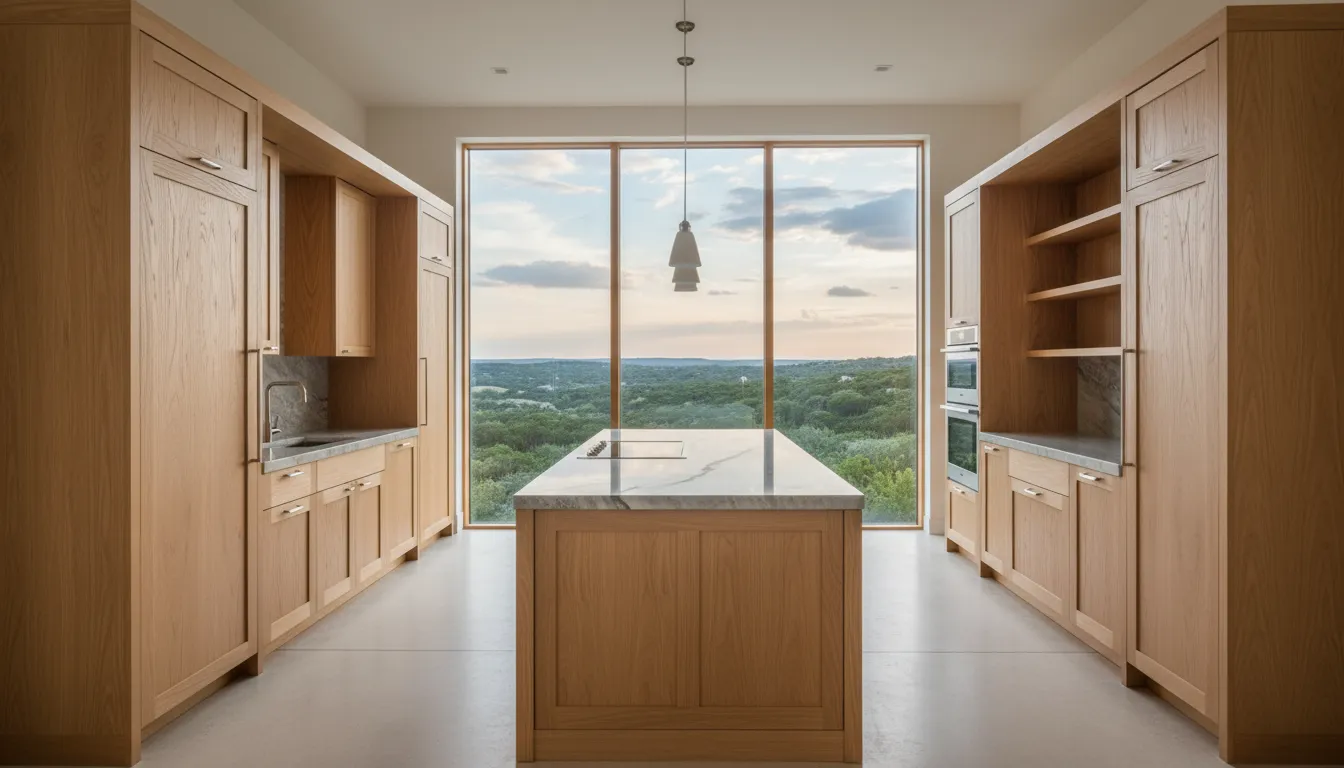
I’ve Seen Texas Humidity Warp Luxury Kitchens—Here’s What We Learned About Material Selection
In the high-end residential enclaves of West Lake Hills and Tarrytown, we often see a recurring tragedy: a multi-million dollar kitchen renovation where the cabinet doors begin to "stick" or "check" within eighteen months. In Central Texas, humidity isn't just a weather report; it is an architectural adversary. When the dew point climbs in the Hill Country, your cabinetry acts like a sponge. As expert carpenters for the TX Pros network, we’ve spent decades analyzing how different substrates react to the specific atmospheric pressures of Austin and its surrounding areas.
Choosing between solid wood, plywood, and MDF isn’t just about aesthetics—it’s about moisture-load management and dimensional stability. Here is our technical breakdown of which materials survive the brutal Texas climate and which ones succumb to the swell.
The "AC Myth": Why Your HVAC Doesn't Fully Protect Your Woodwork
It is the most common question we get from homeowners: "I keep my AC at 70 degrees year-round—doesn't that solve the humidity problem?" In theory, yes. In reality, relying solely on your HVAC is a gamble with luxury woodwork. During the Texas "shoulder seasons" in spring and fall, the temperature might sit at a comfortable 72 degrees, meaning your AC rarely kicks on. However, the outside humidity can still hover at 85%. Because the air isn't being conditioned, your home quietly absorbs that moisture.
Furthermore, kitchens generate their own micro-climates. Opening a steaming dishwasher or boiling a large pot of pasta dumps concentrated moisture directly onto your cabinet faces. Finally, during the construction phase, cabinets are often installed weeks before the home is perfectly sealed and the HVAC is balanced. By the time you move in, the wood has already absorbed massive amounts of construction moisture. If you chose the wrong materials, the damage is already done.
We Put Solid Wood to the Test: Why It Isn't Always the "Premium" Choice
There is a persistent myth among homeowners in neighborhoods like Rollingwood that "solid wood" is the only mark of quality. While rift-sawn white oak or walnut offers unparalleled grain continuity, solid wood is inherently hygroscopic. It breathes. In a Dripping Springs summer, a solid wood raised-panel door can expand by as much as 1/8" to 1/4" across its width.
When we build with solid wood, we utilize coping miters and floating panels to allow for this movement. However, if you are opting for a seamless, painted aesthetic, solid wood is often your worst enemy. The expansion and contraction cycles will inevitably break the "bridge" of paint at the stile and rail joints, leading to visible hairline cracks. For high-end builds, we typically reserve solid wood for the face frames and specific stained accent pieces where the natural movement can be engineered into the design.
The Stability Secret: Why We Recommend Furniture-Grade Plywood for Lakeway Interiors
If you are building near Lake Travis, the micro-climate demands a material with "cross-grain stability." This is where furniture-grade plywood shines. Unlike solid wood, plywood is constructed of thin veneers glued in alternating directions. This cross-lamination cancels out the wood’s natural urge to warp or twist when the humidity spikes.
For a typical 50-linear-foot kitchen in a luxury Lakeway estate, we utilize 13-ply Baltic Birch or high-end veneer cores. These materials offer the screw-holding strength of solid wood but with a fraction of the dimensional movement. It is the gold standard for cabinet boxes and structural shelving, ensuring your soft-close hinges stay aligned for decades rather than months. Expect a premium plywood build to add approximately $4,500 to $10,000 to a standard project cost, but the longevity in the Texas heat justifies every cent.
I Used to Avoid MDF—Until I Saw How It Handles a Dripping Springs Summer
Many high-end homeowners cringe at the mention of MDF (Medium-Density Fiberboard), associating it with flat-pack furniture. However, in the world of bespoke, painted cabinetry, high-density MDF is a mechanical marvel. Because it has no grain structure, it is isotropically stable—it doesn't expand in one direction more than another.
When we apply a conversion varnish or a high-end unlacquered brass hardware set to an MDF door, the finish remains glass-smooth regardless of whether it's a dry January or a swampy August. For our clients in the Bee Cave area who demand a flawless "Level 5" paint finish, we often recommend MDF center panels paired with solid wood frames, or full MDF doors for contemporary slab styles. It won't crack, it won't "telegraph" grain lines, and it ignores the Texas humidity entirely.
The Verdict: Engineering for the Austin Climate
Surviving the Texas climate requires a hybrid approach. We’ve found the "sweet spot" for luxury Austin homes usually involves a rift-sawn solid wood frame for beauty, a plywood box for structural integrity, and MDF panels for painted stability. A full custom cabinetry package for a high-end home typically requires a lead time of 10 to 14 weeks to ensure proper acclimation to the local environment.
Are you planning a kitchen or library build in the Greater Austin area? Don't let the humidity dictate the lifespan of your investment. Contact TX Pros today for a professional cabinetry consultation in West Lake Hills, Lakeway, and across Central Texas. Let our master carpenters build you a kitchen that stays as straight and true as the day it was installed.
Relevant Services
Related Field Notes
Top 5 Kitchen Cabinet Trends in Austin for 2026: From White Oak to Skinny Shakers
As Austin's luxury real estate market shifts toward a refined 'Hill Country Modern' style, kitchen cabinetry takes center stage. Discover the top five trends for 2026, from organic textures to architectural lines.
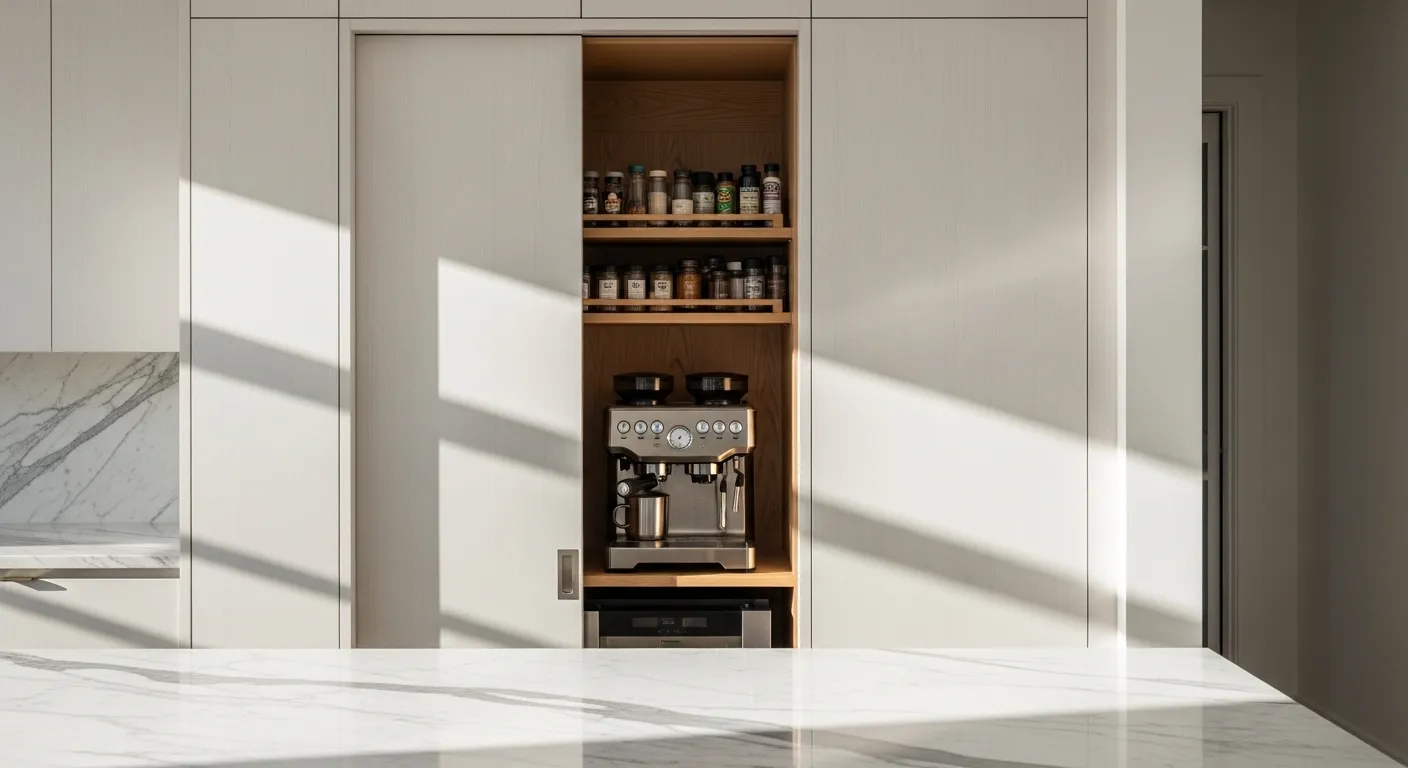
Hidden Functionality: Clever Storage Solutions for Cabinetry
Austin's luxury kitchen design is shifting towards "hidden functionality." Explore how custom millwork and appliance garages create seamless, minimalist spaces in West Lake Hills and Tarrytown.
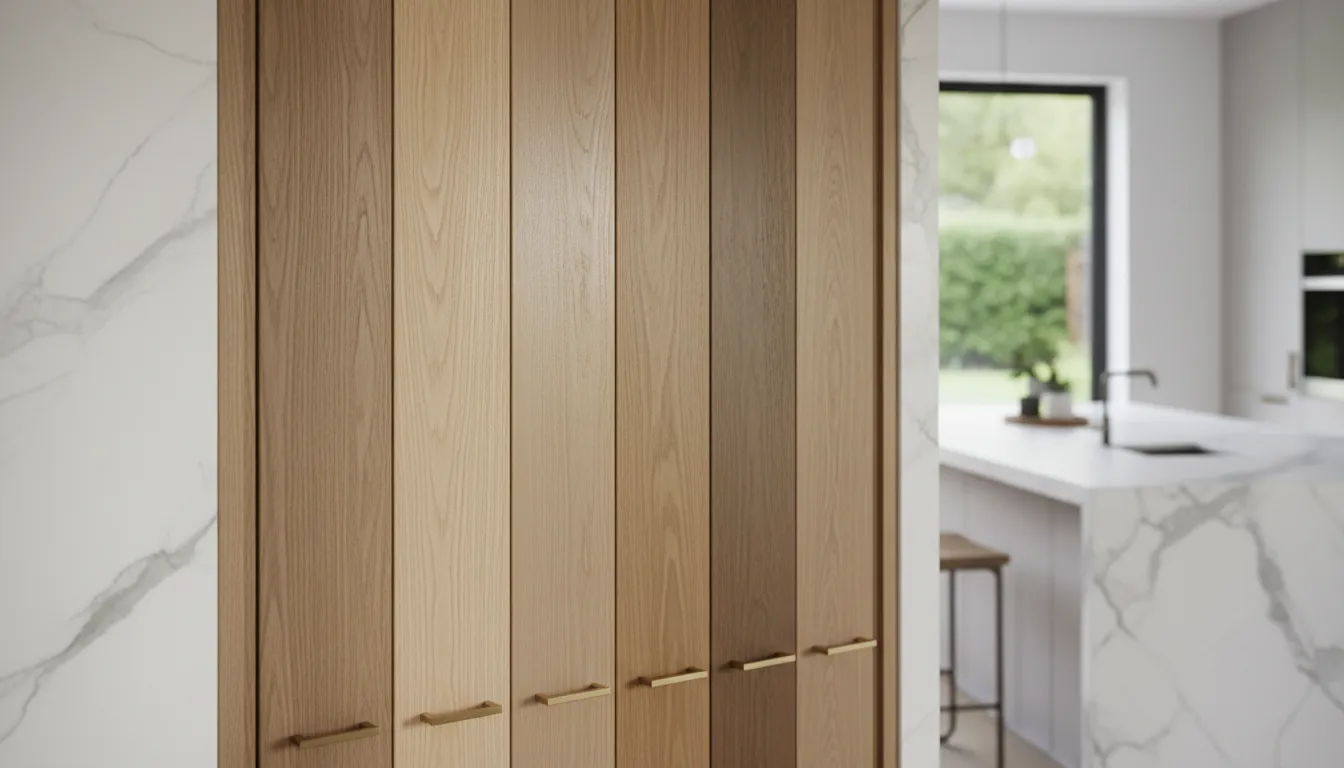
I Tested 5 Cabinet Finishes for 6 Months in a Texas Kitchen
To find the best cabinet finish for the Texas climate, we installed five white oak doors with different topcoats in a high-traffic Dripping Springs kitchen. After six months of humidity and chemical exposure, the results are in.
See Our Work.
We don't just write about it. Here are recent projects matching this topic.
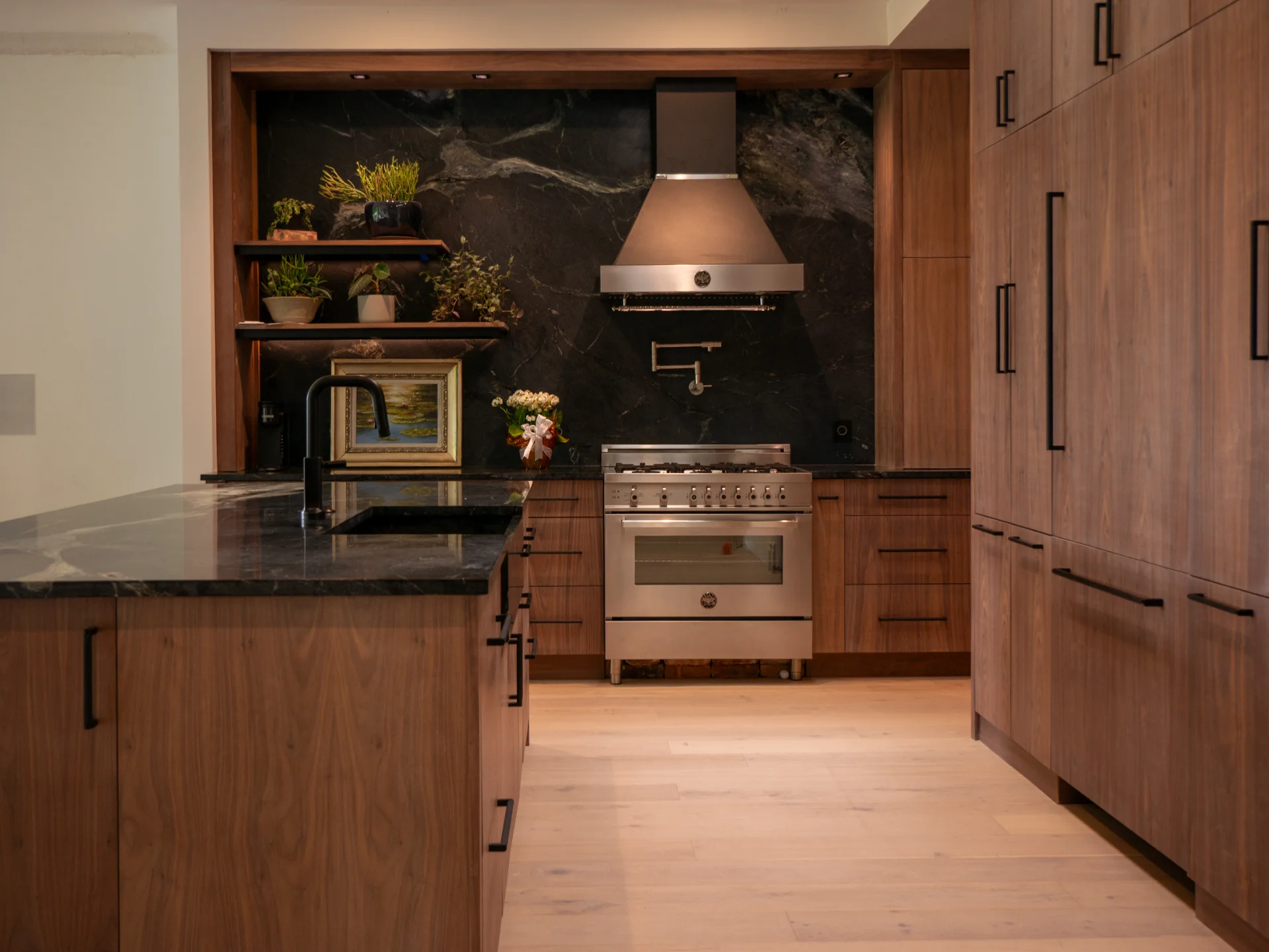
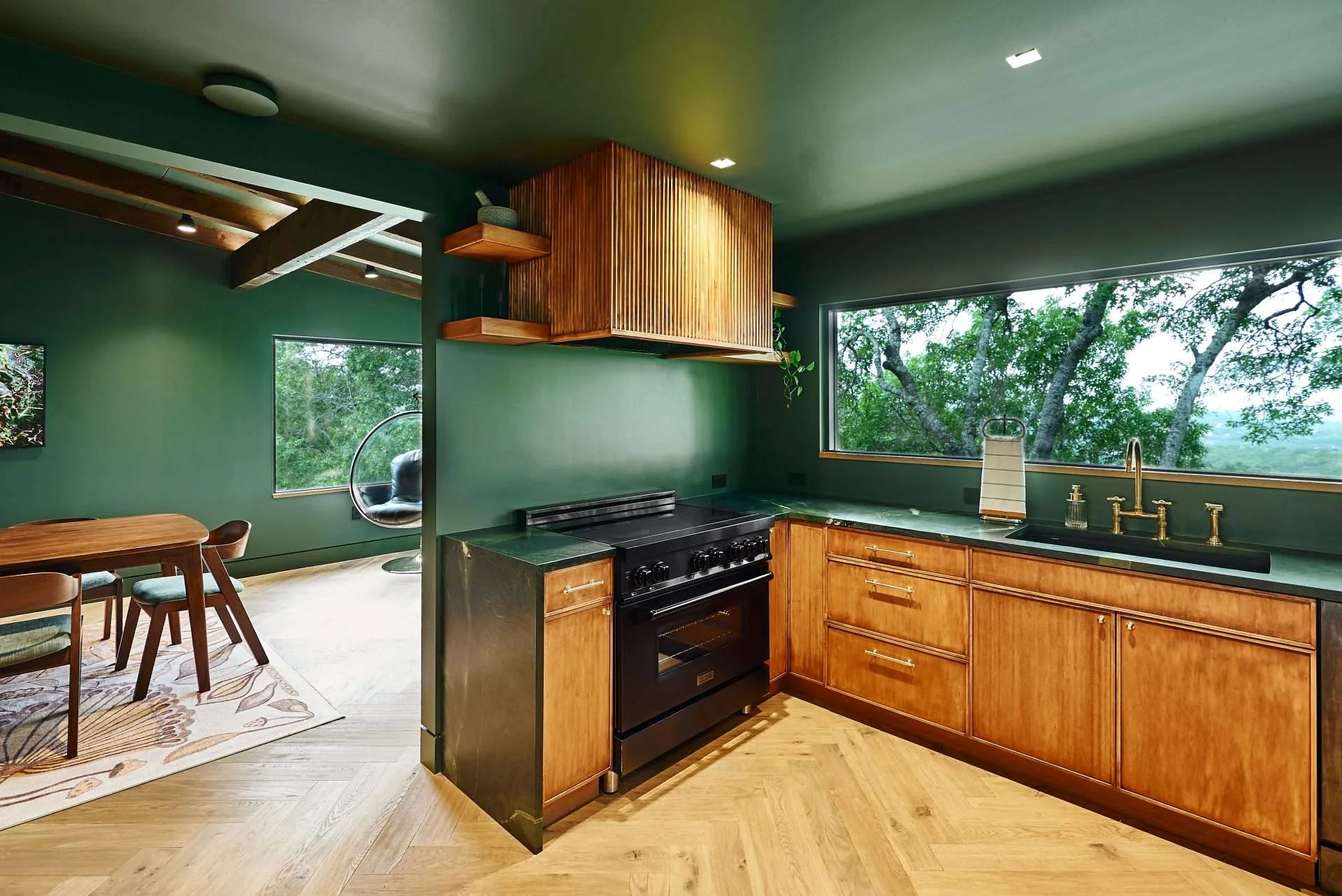
Modern Grain-Matched Walnut Kitchen with Green Soapstone
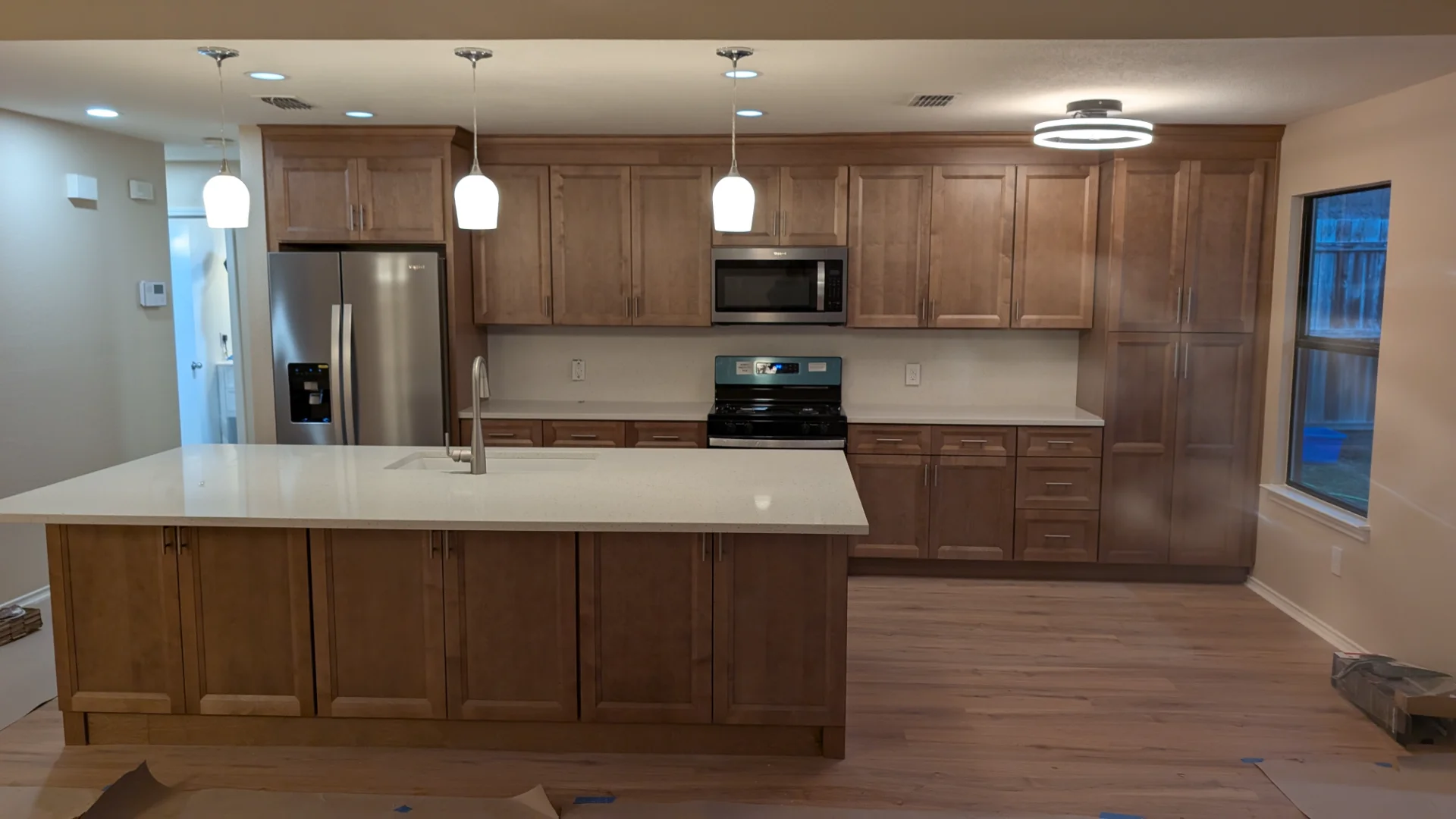
Oxford Toffee & Quartz Culinary Transformation in Buda
Inspired by this project?
Let's discuss how we can bring this level of craftsmanship to your home.