Why Big Box RTA Cabinets Cost 40% More Than the Sticker Price
The Illusion of the Low Sticker Price
For many homeowners embarking on a kitchen remodel, the local big box retailer feels like the most logical starting point. The aisles are filled with displays showcasing seemingly bargain-basement prices on Ready-to-Assemble (RTA) cabinetry. However, that enticing sticker price is often a carefully constructed illusion designed to get you in the door. For the homeowner who desires a kitchen that looks good and lasts for more than a few years, the final invoice at a big box store is frequently 40% to 60% higher than the initial quote.
The discrepancy lies in the definition of "standard." When you see a low price on a shelf at a major retailer, you are looking at the absolute minimum specifications—often referred to in the industry as "builder grade." To transform that basic unit into a high-quality cabinet that meets modern standards, you must navigate a minefield of expensive upgrades. By the time you reach an apples-to-apples comparison with a premium RTA provider, the big box "bargain" has vanished.
The Particle Board Box vs. Plywood Reality
The most significant hidden cost in big box cabinetry is the material used for the cabinet box itself. The base price almost always assumes a furniture-board or particle board construction. While particle board is inexpensive, it is essentially compressed sawdust held together by resin. In a kitchen environment—where heavy granite or quartz countertops exert constant pressure and minor plumbing leaks are a matter of "when" rather than "if"—particle board is a liability. It is prone to sagging and can swell or disintegrate when exposed to moisture.
To get a plywood box—the industry standard for durability and longevity—big box stores require a "premium construction" upgrade. This single change can add 20% or more to the cost of each individual unit. While they treat plywood as a luxury add-on, we believe it is a necessity. Our cabinets feature all-plywood construction as a standard, ensuring your kitchen maintains its structural integrity for decades without the "upgrade" tax.
The Soft-Close Surcharge
The "feel" of a modern kitchen is defined by its hardware. In the current market, soft-close hinges and drawer glides are no longer considered a luxury; they are an expectation. However, the sticker price at a big box store usually includes basic side-mount glides and standard "slam-shut" hinges. These components are noisy, prone to misalignment, and lack the smooth action of high-end hardware.
When you ask for under-mount, full-extension, soft-close drawer glides at a big box retailer, you are hit with another massive upcharge. Because these retailers source their hardware separately from their entry-level boxes, the cost of adding soft-close functionality to a full kitchen can add hundreds, if not thousands, of dollars to the total. Conversely, our pricing model includes soft-close glides and hinges as a standard feature. We don't believe you should have to pay extra for a drawer that doesn't slam.
The "Hidden" Finished Sides
Another common trap for the mid-tier homeowner is the "finished end" fee. Many big box RTA lines are sold with unfinished "raw" cabinet sides. The expectation is that you will purchase matching decorative end panels or "skins" to cover the exposed sides of your cabinetry. This is a modular way for retailers to keep the base price low, but it forces the consumer to buy extra parts just to make the kitchen look complete. These panels are rarely cheap, and they add another layer of complexity and cost to the installation.
In an apples-to-apples comparison, you’ll find that our cabinets come with finished sides standard. There are no surprise panels to buy and no hidden costs to ensure your end-run cabinets match your door faces. When you add up the plywood upgrade, the hardware upgrade, and the finished side panels, the big box sticker price quickly balloons, often exceeding the cost of our premium-standard cabinets by 40% or more. By choosing a provider that includes these essentials from the start, you aren't just getting a better cabinet—you're getting an honest price.
Relevant Services
Related Field Notes
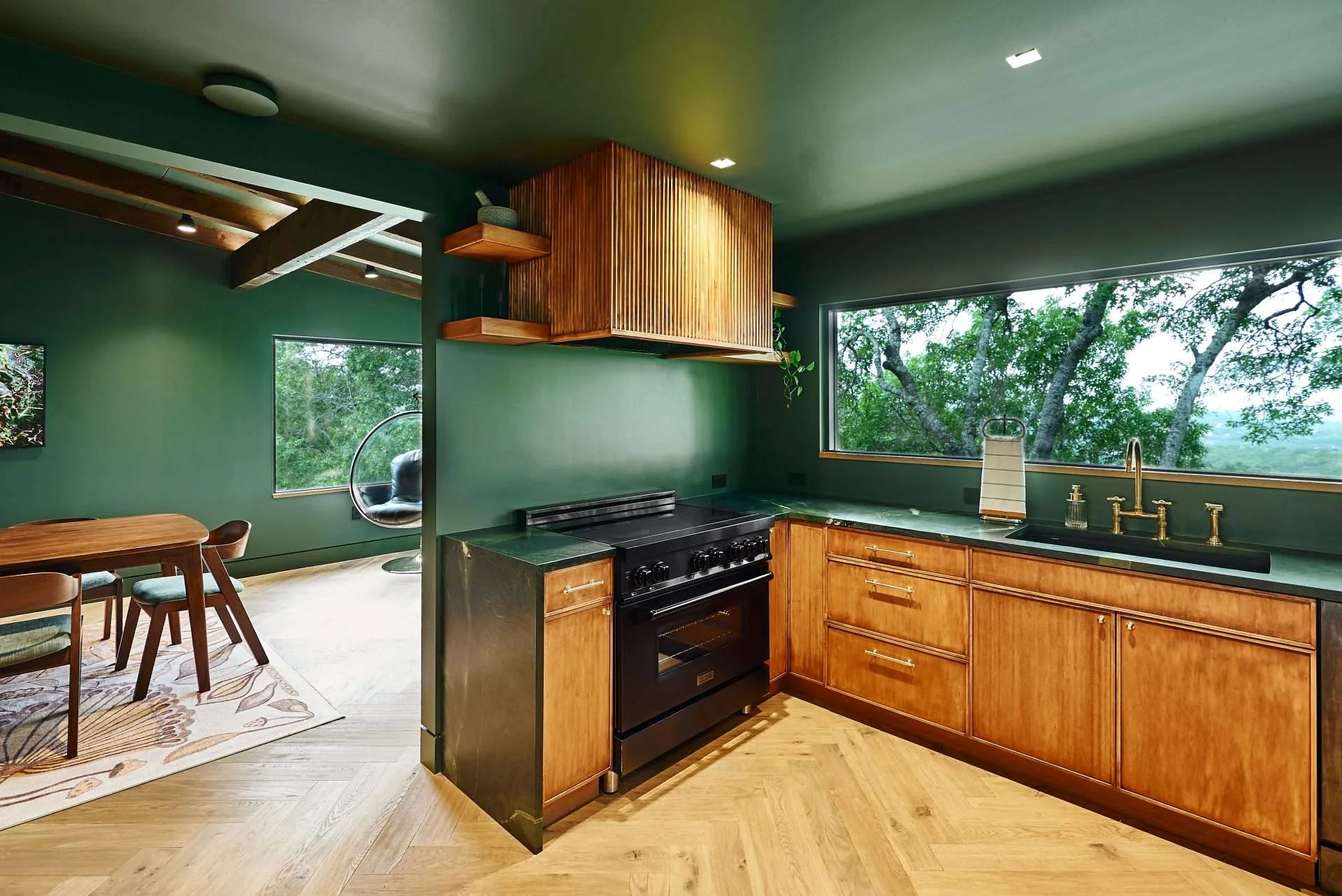
Top 5 Kitchen Cabinet Trends in Austin for 2026: From White Oak to Skinny Shakers
As Austin's luxury real estate market shifts toward a refined 'Hill Country Modern' style, kitchen cabinetry takes center stage. Discover the top five trends for 2026, from organic textures to architectural lines.
kitchen cabinet handles can make a kitchen feel more put together
Hardware is the 'jewelry' of the kitchen. In our recent Lakeway project, we demonstrated how upgrading handles can bridge the gap between functionality and curated style.
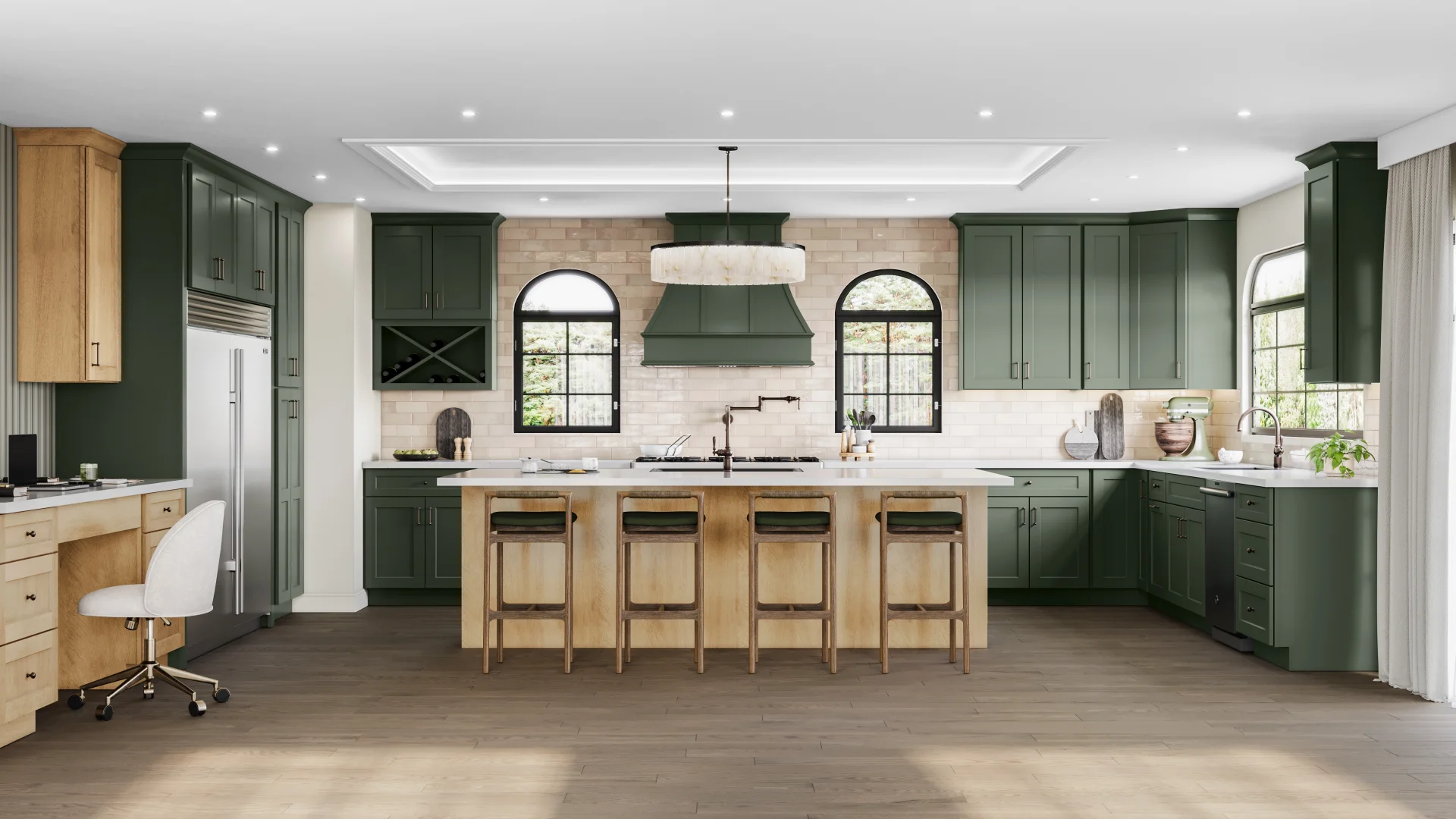
Why Your Kitchen Remodel Shouldn't Take 6 Months
Avoid the six-month kitchen nightmare. Learn how TX Cabinet Pros uses 3D CAD design to eliminate construction delays and deliver precision-engineered kitchens in West Lake Hills and Lakeway.
See Our Work.
We don't just write about it. Here are recent projects matching this topic.
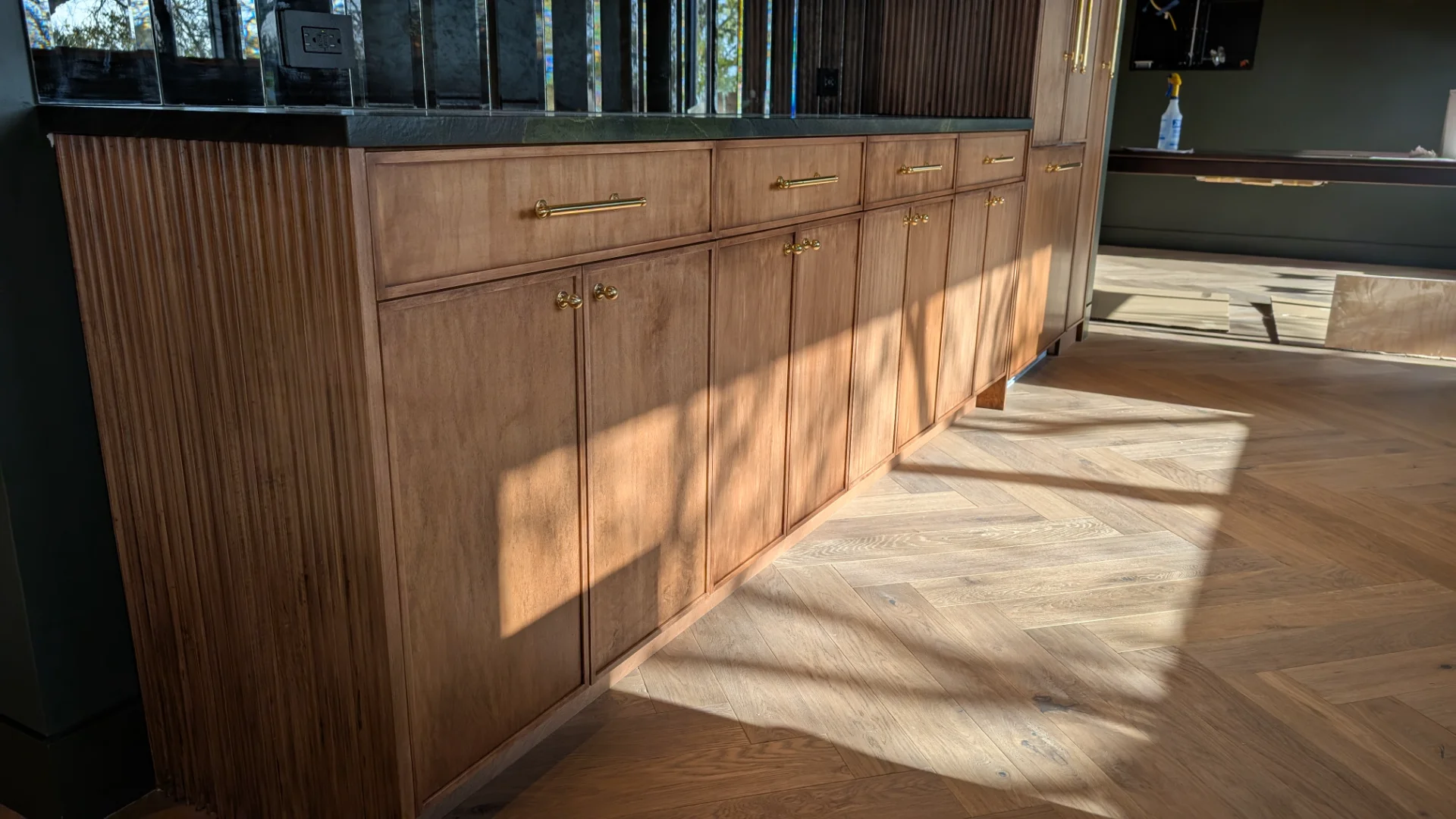
Modern Organic Kitchen with Deep Green Soapstone and Fluted Accents

Pastel Modernity: A Vibrant Kitchen Transformation
Inspired by this project?
Let's discuss how we can bring this level of craftsmanship to your home.